
It is one of the oddest moons in the solar system. Miranda,
a small, icy moon of Uranus, is covered in giant fault canyons 12 times as deep
as the Grand Canyon, giving it a unique look leading to it being called a
'Frankenstein moon'. Now, researchers say they have finally discovered why it
looks so unusual. Despite its relatively small size, Miranda appears to have
experienced an episode of intense resurfacing that resulted in the formation of
at least three remarkable and unique surface features -- polygonal-shaped
regions called coronae.
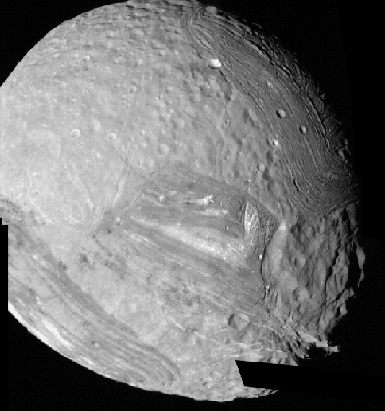 Inverness corona has a trapezoidal shape with a large,
bright chevron at its center. The giant
fault canyons are as much as 12 times as deep as the Grand Canyon. Due to
Miranda's low gravity and large cliffs, a rock dropped off the edge of the
highest cliff would take a full 10 minutes to reach the foot of the cliff. All of Uranus' larger moons, including
Miranda, are thought to consist mostly of roughly equal amounts of water ice
and silicate rock. The northern hemisphere of Miranda was never imaged by the
Voyager 2 spacecraft, so it is unknown whether additional coronae exist.
Inverness corona has a trapezoidal shape with a large,
bright chevron at its center. The giant
fault canyons are as much as 12 times as deep as the Grand Canyon. Due to
Miranda's low gravity and large cliffs, a rock dropped off the edge of the
highest cliff would take a full 10 minutes to reach the foot of the cliff. All of Uranus' larger moons, including
Miranda, are thought to consist mostly of roughly equal amounts of water ice
and silicate rock. The northern hemisphere of Miranda was never imaged by the
Voyager 2 spacecraft, so it is unknown whether additional coronae exist.


No comments:
Post a Comment